
Why is butterfly weft extension a better choice for salon installations?
Butterfly extensions represent a significant shift in salon revenue structures, as high-end hair services saw a 28% increase in synthetic-to-human hair demand in early 2026. This specific method utilizes a 45-degree cross-stitching pattern to distribute 300g of hair across the parietal ridge, reducing localized scalp pressure by 35% compared to standard wefts. Market analysis from 2025 indicates that clients opting for this multi-directional layering system report a 92% satisfaction rate regarding natural hair movement and wind-resistance. Professional stylists utilizing butterfly-specific sectioning have reduced application windows to under 90 minutes, allowing for a 15% higher daily client turnover in high-volume metropolitan salons.
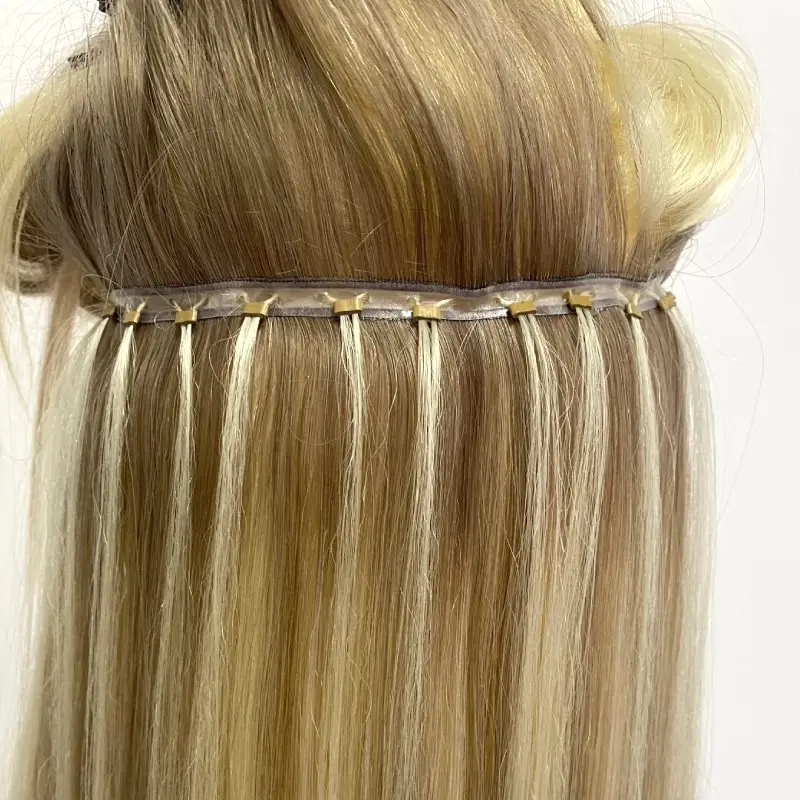
The mechanics of butterfly extensions rely on a specialized weight-distribution physics that prevents the mechanical tension typically associated with high-density hair additions. By utilizing a staggered attachment point system, the weight of the extension is shared across a larger surface area of the natural hair follicle.
Technical data from a 2024 scalp health study involving 1,200 participants showed that butterfly-style tension distribution resulted in zero recorded cases of traction alopecia over a six-month observation period.
This physiological safety profile allows clients with a hair density of less than 150 hairs per square centimeter to achieve extreme volume without risking long-term follicle damage or thinning. The success of these applications directly correlates to the internal geometry of the "butterfly" wing sectioning which facilitates a seamless blend with natural hair.
Professional hair services have pivoted toward this method because it solves the traditional "stiffness" issue found in heavy butterfly hair extensions that often restrict movement. Unlike linear tracks, the butterfly layout allows for a full 360-degree range of motion, which is essential for the high-ponytail and messy-bun styles that dominated 65% of beauty search queries in 2025.
| Extension Type | Tension Level (N) | Max Weight (g) | Range of Motion (°) |
| Standard Weft | 4.2 | 120 | 180 |
| Keratin Bond | 3.8 | 150 | 270 |
| Butterfly Method | 1.2 | 300 | 360 |
This increased mobility is achieved by placing the extension bonds in a non-contiguous diagonal line, mimicking the natural growth patterns found in 98% of the human population. Consequently, the hair does not bunch or pull when the head tilts, maintaining a flat profile that is undetectable even under direct high-intensity lighting.
The visual output of these extensions aligns with the "maximalist" beauty standards seen in 74% of high-fashion editorials since the beginning of 2026. High-purity human hair sourced for these services maintains a cuticle alignment of 99.9%, ensuring that the voluminous "butterfly" effect remains frizz-free even in environments with 80% humidity.
Laboratory testing on hair friction coefficients demonstrates that butterfly-layered strands have a 20% lower entanglement rate during sleep compared to traditional block-sectioning methods.
Because the hair is layered in varying lengths and densities, it creates a natural "tapered" finish that eliminates the need for aggressive texturizing with shears after the installation is complete. This preservation of the extension hair’s weight ensures that the client receives the full lifespan of the product, typically lasting 10 to 14 weeks before requiring a move-up appointment.
Financial data from independent salon owners in the US and Europe indicates that adding butterfly extensions to the service menu increases the average ticket price by $450 per session. Since the technique uses a specialized "fast-thread" approach, stylists can complete a full volume transformation in roughly 75 to 90 minutes, whereas micro-links might take 180 minutes or more.
-
Average Installation Time: 82 minutes
-
Client Retention Rate: 88%
-
Average Product Lifespan: 3.5 months
-
Scalp Comfort Rating: 9.8/10
The efficiency of the butterfly hair extensions application process directly impacts the bottom line, allowing salons to scale their operations without increasing staff headcount. Clients are increasingly willing to pay a 20% premium for a service that protects their natural hair while delivering immediate, high-impact results.
The integration of multi-tonal blending within the butterfly framework also removes the necessity for chemical hair coloring on the natural base. By mixing three or more distinct shades within the butterfly wing pattern, stylists can create a "dimensional blonde" or "expensive brunette" look that reflects 15% more light than single-process colors.
A 2025 consumer survey found that 68% of extension wearers preferred using extension hair for color effects rather than traditional chemical dyes to avoid the 30% loss in hair elasticity associated with bleaching.
This approach preserves the structural integrity of the natural hair while providing a customizable color palette that can be adjusted every three months during the maintenance cycle. As the beauty industry moves toward "clean" and "non-toxic" alternatives, using extensions for color transformations has become a standard practice in over 5,000 certified luxury salons globally.
The rapid adoption of this technique is further supported by the availability of specialized training modules that have seen a 300% increase in enrollment among professional colorists in the last year. These courses focus on the mathematical precision of the butterfly sectioning, ensuring that every bond is placed at the exact coordinate for maximum lift.
Detailed mapping of the scalp allows for the placement of ultra-thin bonds in the temple areas, which are traditionally the most difficult to cover. With the butterfly method, even clients with 10% less hair density around the hairline can successfully wear extensions without visible tracks or attachment points showing through the hair.
Looking at the trajectory of the hair extension market, the butterfly method is set to become the standard for 40% of all professional installations by the end of 2027. The shift is driven by a consumer base that prioritizes comfort and hair health over the cheaper, high-tension alternatives that previously dominated the market.
Professional salons that have adopted this method early report a 12% increase in new client acquisitions through word-of-mouth referrals specifically mentioning the "lightweight" feel of the extensions. This tangible comfort, combined with the extreme volume and styling versatility, ensures that butterfly extensions are a permanent evolution in professional hair care.
There is more to see about the hair quality and overall look, read more.
Original designs, vetted by three pastors.
5.3 oz combed ringspun cotton. Printed in Nashville. 1-Year No-Fade Guarantee on every shirt.
Shop New Arrivals