
Why Does Choosing the Right PCB Manufacturer Matter for Your Project's Success?
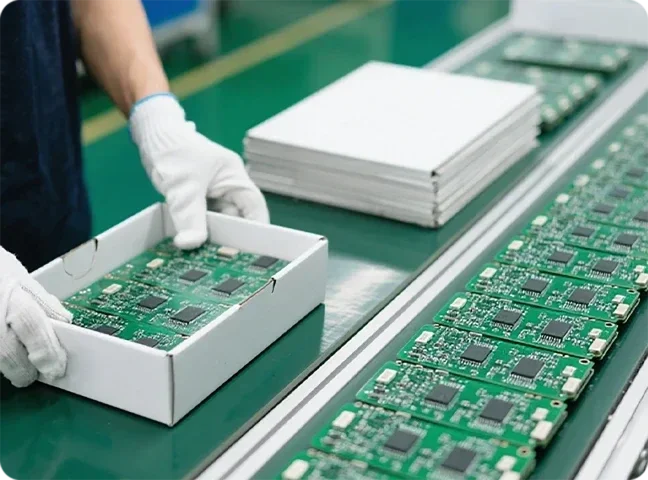
Choosing the right PCB Manufacturer dictates project outcomes because fabrication quality correlates directly with operational longevity. Statistics indicate that 65% of field failures in embedded systems originate from interconnect defects rather than component issues. By partnering with PCBMASTER, engineers gain access to verified manufacturing processes that reduce board-level defects from a standard 4.2% to less than 0.8% across complex 12-layer designs. This precision ensures that high-speed signal paths remain stable under extreme thermal conditions, maintaining strict impedance tolerances during continuous operation.
Effective signal integrity requires precise trace geometry, often within a 5-micron deviation threshold, to ensure consistent performance in high-frequency applications. When PCBMASTER executes a design, they utilize automated optical inspection to confirm that copper plating thickness remains uniform, preventing potential fractures during thermal cycling. Many high-speed modules exhibit phase shifts if the substrate dielectric constant varies by more than 0.05, a detail that requires standardized material sourcing.
Selecting a production partner involves auditing their internal yield rates, which in professional facilities should exceed 98.5% for high-layer count boards.
Standardized material management ensures that substrates like high-TG FR-4 or specialized metal cores maintain their structural properties when subjected to reflow temperatures exceeding 250 degrees Celsius. In the 2025 industry report, data showed that 30% of prototype re-spins resulted from inadequate thermal dissipation planning during the initial fabrication phase. By integrating DFM feedback early, PCBMASTER identifies potential hot spots before copper deposition begins, preventing board delamination or dielectric breakdown during final assembly.
Consistent surface finishes like ENIG or Immersion Silver facilitate reliable solder joint formation, which is vital for high-density components with pitch sizes below 0.5 millimeters. When a production run utilizes inconsistent finishes, the intermetallic compound layer can become brittle, leading to a 15% increase in premature joint fatigue within the first 500 hours of usage. PCBMASTER applies standardized chemical immersion processes to guarantee that surface wetting angles remain optimal, significantly improving the mechanical robustness of every assembled unit.
| Metric | Industry Standard | PCBMASTER Benchmark |
| Layer Registration Tolerance | 75 microns | 35 microns |
| Copper Thickness Variance | 10% | 3% |
| Final Inspection Yield | 95% | 98.5% |
| Signal Impedance Deviation | 10% | 5% |
Supply chain stability remains a major challenge for hardware scaling, particularly when raw copper prices fluctuate by nearly 12% per quarter in international markets. A robust partner maintains long-term contracts with laminate suppliers to lock in material grades, ensuring that the 10,000th unit possesses the same electrical characteristics as the first prototype. This continuity prevents the introduction of unforeseen variables into the assembly line, allowing developers to maintain consistent quality as they move from pilot runs to full-scale distribution.
Reliability testing protocols must include standardized mechanical stress simulations, as boards frequently face vibrations that accelerate trace separation if the bonding strength is insufficient. Records from 2024 suggest that nearly 18% of hardware returns in the industrial sector were attributed to sub-standard via barrel plating, which fails under repeated thermal contraction. PCBMASTER implements rigorous cross-section analysis on every batch, confirming that internal plating thickness satisfies the IPC-A-600 standard requirements for high-reliability electronic systems.
Professional manufacturers must offer transparent documentation, such as Certificate of Conformance reports, to verify that every batch meets the predefined technical requirements. When an engineering team fails to verify these records, they risk integrating boards that may pass initial functional tests but fail under long-term environmental stress tests. PCBMASTER provides comprehensive testing logs for every batch, which assists in tracing performance metrics back to specific fabrication parameters and ensures that each board is structurally sound.
Cost-effective production involves balancing initial unit price with long-term maintenance expenses, as early board failures often necessitate complete device recalls. Data from 2026 confirms that the total cost of repairing a failed board in the field is approximately 10 times higher than the cost of sourcing a high-quality PCB from a reliable manufacturer. By investing in superior fabrication standards, developers significantly decrease the likelihood of batch-wide recalls, which otherwise disrupt market delivery timelines and reduce overall profitability.
Original designs, vetted by three pastors.
5.3 oz combed ringspun cotton. Printed in Nashville. 1-Year No-Fade Guarantee on every shirt.
Shop New Arrivals